
Grains and Gut
When looking at improving your gut health, you may have heard that grain-free or gluten-free is best. However, this is not often the case for everyone. Unless you have a health disorder that prevents you from ingesting grains, it is probably okay for you to continue eating. However, being mindful of your consumption is always a good idea. I personally do not have a medical condition that prevents me from eating gluten. I am being mindful of my consumption of gluten to help improve my skin concerns. This means I am not having pasta, English muffins, or sandwiches as often as I was. Let’s be honest, the last month or so I have eaten these foods more often. It’s no wonder my skin has flared up. This is forcing me to plan ahead so I have proteins ready to reheat. I am preparing smoothies for breakfast. I am making more salads.
Curious what the breakdown of grains is? What are the many different kinds to chose from?
What is Gluten?
According to the Celiac Disease Foundation, “Gluten is a general name for the proteins found in wheat (wheatberries, durum, emmer, semolina, spelt, farina, farro, graham, KAMUT® Khorasan wheat, and einkorn), rye, barley, and triticale – a cross between wheat and rye”. It can be difficult for some people to ingest and this is known as Celiac Disease. However, there are also people who have a gluten sensitivity. Some individuals may a reaction to where it needs to be limited or avoided. Oftentimes, you can go through a gut healing protocol and be able to ingest gluten easier. This does not work for everyone though.
The biggest 3 forms of gluten are that of wheat, barley, and rye. These can be found in bread, pasta, beer, and cereal, just to name a few. You can also find gluten in various sauces. People with a gluten allergy have to buy specialty foods that contain no gluten. They become master’s of food labels to protect themselves. It is important to read labels to check for any forms of gluten, as it can sometimes be hidden. Generally, condiments, salad dressings, and others can contain gluten. Also, many foods that are gluten-free contain more sugar.
Ancient Grains
Not all grains are bad, especially if you do not have an allergy or sensitivity. Have you heard of ancient grains? The Whole Grains Council defines them as “grains that are largely unchanged over the last several hundred years”. They are not processed like white rice or white flour is. This makes it easier on the digestive system.
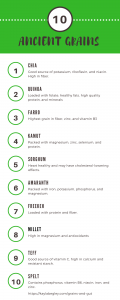
Each of these has great qualities that make them valuable in your diet. They are generally more nutritious than refined grains. Brown rice, whole grain pasta, oatmeal, popcorn, and whole wheat bread can be just as nutritious in your diet as ancient grains can.
Gluten-Free Grains
For those who must eat gluten-free, there are grains you can have. You don’t have to avoid all grains! Having a balanced diet is key to ensuring your body receives the nutrients it needs to thrive.
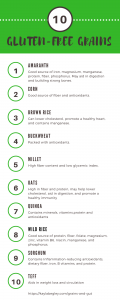
You may have noticed, some of these overlap with ancient grains. Always remember to check with your medical provider prior to eliminating any food group to ensure it’s in your best interest.
Not all grains are bad for you, as you can see. Some diets call for the removal of all grains. This is not necessarily a good idea unless directed by your doctor. Keeping a variety of grains in your stock would be beneficial to you and your health. There are many different health benefits to each of these grains.




You must be logged in to post a comment.