How to Enrich Your Homeschool Nature Study with Poetry and Art

When I first started homeschooling, I thought nature study was all about identifying plants, drawing leaves, and keeping a journal. While those things are beautiful in themselves, I quickly discovered that our days felt fuller and richer when we wove in more than just the outdoors.
Charlotte Mason called it “spreading the feast”—giving our children a wide table of ideas to nourish their hearts and minds. And I’ve found that when we add poetry, music, and art to our seasonal studies, our homeschool rhythm shifts from just “lessons” to living learning.
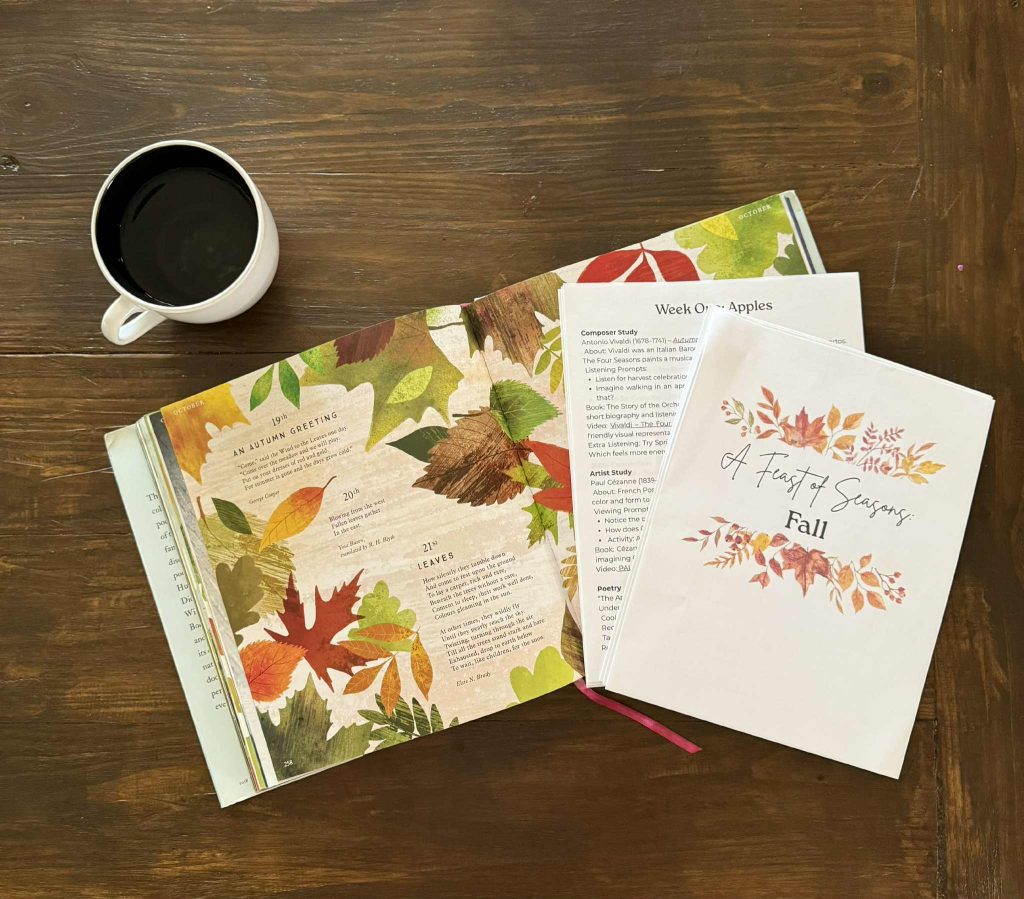
That’s why our Fall Nature Study is built on four pillars: nature, poetry, composer study, and artist study. Each piece adds depth, beauty, and connection.
Nature + Science (Hands-On, Seasonal Focus)
Nature is the heartbeat of this study. Each week begins with a seasonal theme—apples, birds, leaves—so kids can experience the changing world around them.
Instead of dry worksheets, we step outside, collect treasures, observe closely, and ask questions. We make simple connections to science: life cycles, weather patterns, habitats, and more. This hands-on approach turns curiosity into lasting knowledge.
Poetry (Language + Rhythm of Words)
Alongside nature, we pause for poetry. A short poem each week becomes our anchor—sometimes silly, sometimes thoughtful, always beautiful.
Poetry slows us down. It trains the ear for language, introduces rhythm and rhyme, and gives kids words to capture what they see in the world around them. We read aloud, copy passages, or let the poem linger over teatime.

Composer Study (The Season’s Soundtrack)
Just as each season looks different, it also sounds different. Composer study brings music into our days, creating a kind of soundtrack for our learning.
Each week, we listen to a piece from a carefully chosen composer. Sometimes it plays softly while we do copywork; other times we stop and listen closely together. Music adds atmosphere, beauty, and wonder—it lifts even the simplest lesson into something memorable.

Artist Study (Learning to See Beauty)
Finally, we end each week with an artist study. Looking closely at great works of art teaches children to notice details, appreciate beauty, and see the world through another’s eyes.
We keep it simple: display a painting, ask what they notice, and let them share freely. Art inspires conversations, sparks creativity, and often ties back beautifully to our nature theme. We will also try to recreate it in our own way.

How We Tie It All Together: Poetry Teatime
One of my favorite parts of our homeschool week is Poetry Teatime. We set the table with a pot of tea (or hot cocoa), a plate of simple snacks, and our stack of books.
This is the time we bring all the beauty subjects together:
– Read the weekly poem aloud.
– Play our composer selection softly in the background.
– Display the week’s artist print and let the kids share what they notice.
It’s not formal. It’s not complicated. But it’s a gentle ritual that anchors our week in beauty and connection. The kids look forward to it, and I find it makes these subjects stick in their hearts in a way a checklist never could.

More Than Just a Nature Study
Homeschool doesn’t have to be overwhelming to be meaningful. By adding poetry, music, and art alongside our nature lessons—and tying it all together with Poetry Teatime—we create a rhythm that feels rich, gentle, and doable.
That’s why Apple Week (and every week in the Fall Nature Study) brings together all four—nature, poetry, composer, and artist.
You can try the full Apple Week completely free and join us as we begin Sept 8.
PIN IT FOR LATER!



You must be logged in to post a comment.