
Compost 101
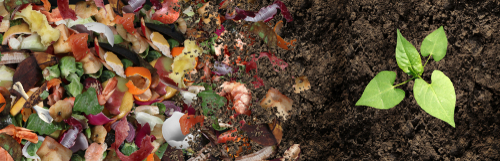
You may have heard the term compost before and wondered what it is and why gardeners love it. To put it simply, it is the substance you get when organic material decomposes. Putting your kitchen scraps and lawn clippings in a pile is a great way to build your compost pile. Once they break down they create a nutrient-rich material that is the perfect additive to your garden to help fertilize your plants.
I have a “cold compost” pile in my yard. It takes longer to break down over time, however, it’s what works for me! My son loves to add worms he finds into it. I also use the compost additive, Jobe’s Organics Compost Starter. I admit I’m not that great at including it when adding a lot of new things to my pile at once. In spite of that, when I do add this in and follow the instructions I note an increase in breakdown to my pile. I plan to snag some worms to help things progress faster through the cooler temps of ‘Texas Winter’.
Why is Compost important?
Most importantly, compost is nutrient-filled to help your plants grow best. It binds your soil together so that the nutrients stay close to your plants. This will also allow moisture to stay near your plant’s roots, keeping them happy.
Compost is made up of organic material that has broken down over time. It is a living matter that contains microorganisms and fungi to promote a healthy and disease-resistant environment. Nutrients that can be found in compost include nitrogen, phosphorus, copper, and zinc.
How to Compost

There are many ways to start composting. You can purchase a composter bin to keep outside. There are options for spinners, vented styles, or you can even just build a 3 walled structure to hold your compost materials. You will want to turn your compost bin in some way to help rotate air through it to aid the decomposition rate. Doing so with a shovel is a great workout. I chose a vented option for my backyard due to size and cosmetic purposes. Let’s be real, I didn’t see myself enjoying looking at a big spinner style. Plus, those suckers get heavy to spin over time too. Maybe one day I’ll hide the big black bin I have, but for now, it’s not a huge eyesore!
Keeping your compost pile moist is another key element in keeping your compost pile healthy. You don’t want it so wet that water is pooling and creating a breeding ground for mosquitos. But you don’t want it so dry that your organic material begins to attract other insects and rodents.
There are two types of compost ways. If you have a hot compost pile, it is typically between 110-180 degrees. This type needs to be turned often to ensure an even temperature and pathogens being killed. It also prevents fly larvae from hatching. This type of pile usually takes about 6 weeks to 3 months to fully break down.
The second style is a cold compost pile. It’s going to be less work for you because you do not have to turn your pile as often. This will take longer to break down though and you should consider it taking you 6 months to 3 years to fully decompose. This pile does not get hot enough to kill pathogens so you need to be mindful of what you add to your pile to ensure they don’t cause issues. Avoid meat and dairy especially.
Your compost pile should not smell rotten or stinky. If yours does, your ratios are off and could cause mold to steam up in your pile and attract unwanted critters.
What to Compost

While many things can be included in your compost pile, there are several you should definitely avoid. This is not a replacement for your garbage system. You can’t put plastics and spoiled food in!
Include
- Fruit and vegetable scraps (as long as they are not molded)
- Leaves
- Flowers
- Grass cuttings
- Mulch
- Soil
- Sticks
- Shells (egg and nuts)
- Rice and bread
Sometimes Include
- Paper products
- Fats, oils and grease
- Meat and Dairy (only if a hot pile!)
- Compostable plastics
Never Include
- Rotten food
- Ivy
- Weeds
- Poisonous plants
- Cleaning supplies
- Feces
- Cat litter
- Plastic and glass
Near my back fence where my bin is, there is ivy growing on it. I have pulled many rogue ivy plants out of my bin. They are relentless!
Many people disagree on manure use in your bin. You can use chicken and sheep feces in your pile but you need to make sure you let it decompose fully prior to adding to your garden beds. For chicken poop, you want to have a ratio of 1:1 of poop (green material) to bedding (brown). When using sheep manure, you can use it as mulch since it is a low odor material. It can also be added to your compost bin, you just want to ensure it ages fully.
Completed Compost

Once everything has fully broken down, it will be a rich earthy material. You will not be able to see what the items are that has been added to your pile as it will be fully decomposed. It should not smell unpleasant and should have an earthy smell. Your pile will have shrunk by half and returned to a normal temperature.
Do you have your own compost pile already? Share your best tips!




You must be logged in to post a comment.